Futex
Futex vs CAS
- All features such as mutex, semaphores, locks, atomic variables are implemented using CPU's CAS instruction.
- If on top we need waiting or blocking feature, then Futex comes into play.
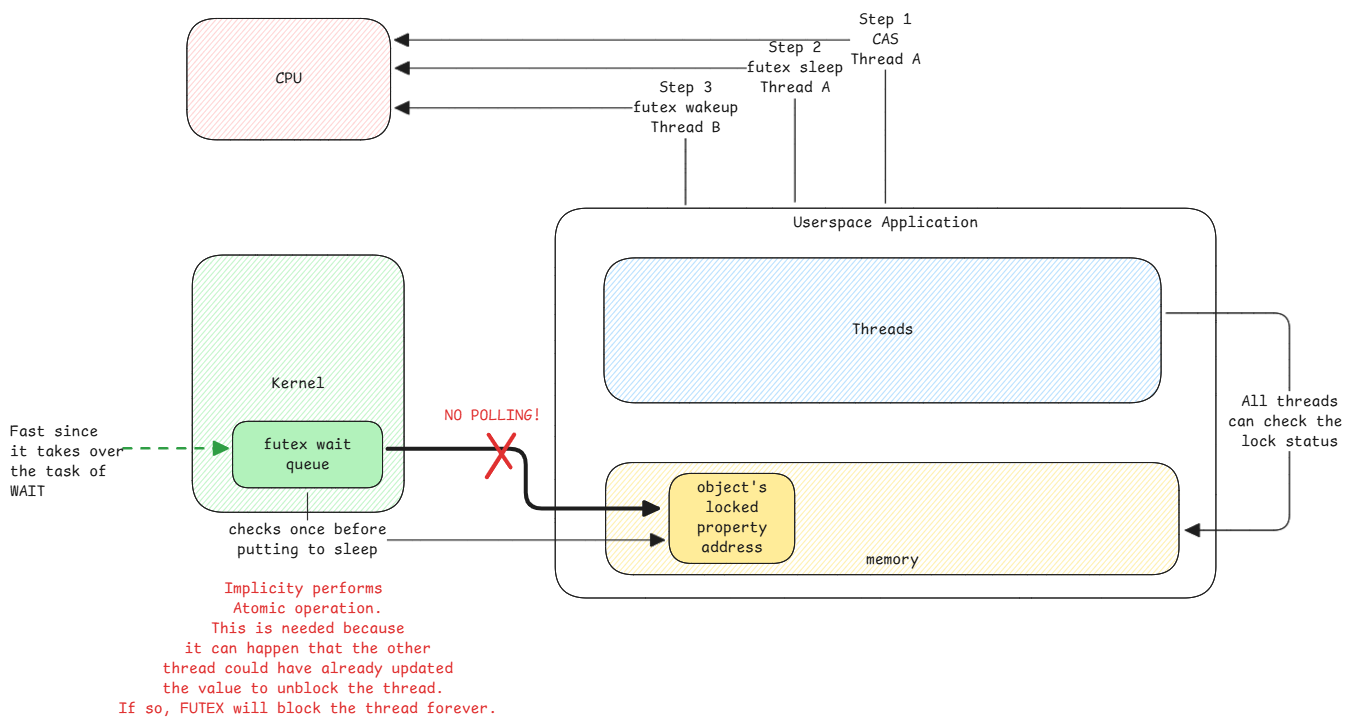
Fast Userspace Mutual Exclusive is a kernel feature. It helps userspace apps build MUTEX solutions for memory locations. It sleeps and wakes threads based on the lock state.
- An app thread calls Futex asking for exclusive access of a memory location. Kernel's Futex system call uses CPU's atomicity to check if it's free or locked. If locked, it will add the thread information and the memory address that it's asking for.
- Futex holds a hash map of memory addresses and blocked threads.
- A second thread holds the lock. When it sets the memory address to free, it also calls Futex with a WAKE_UP command for that address.
- Futex then wakes all the threads that were blocked by that address.
All programming languages use this feature inside to provide locking and synchronization.
Responsibility of the application
It's the responsibility of the application to ensure that it uses Futex to lock and unlock. Only then the real blocking of threads will happen. Otherwise, the thread will remain active waiting for the lock to be released.
Lock address
This can be any address tied to the app. For example, it can be the address of a lock property on the object.
Futex is a Linux feature
Futex is just a linux feature. Even POSIX compliance ensures a Mutex feature. Linux implements the same using Futex.