QEMU
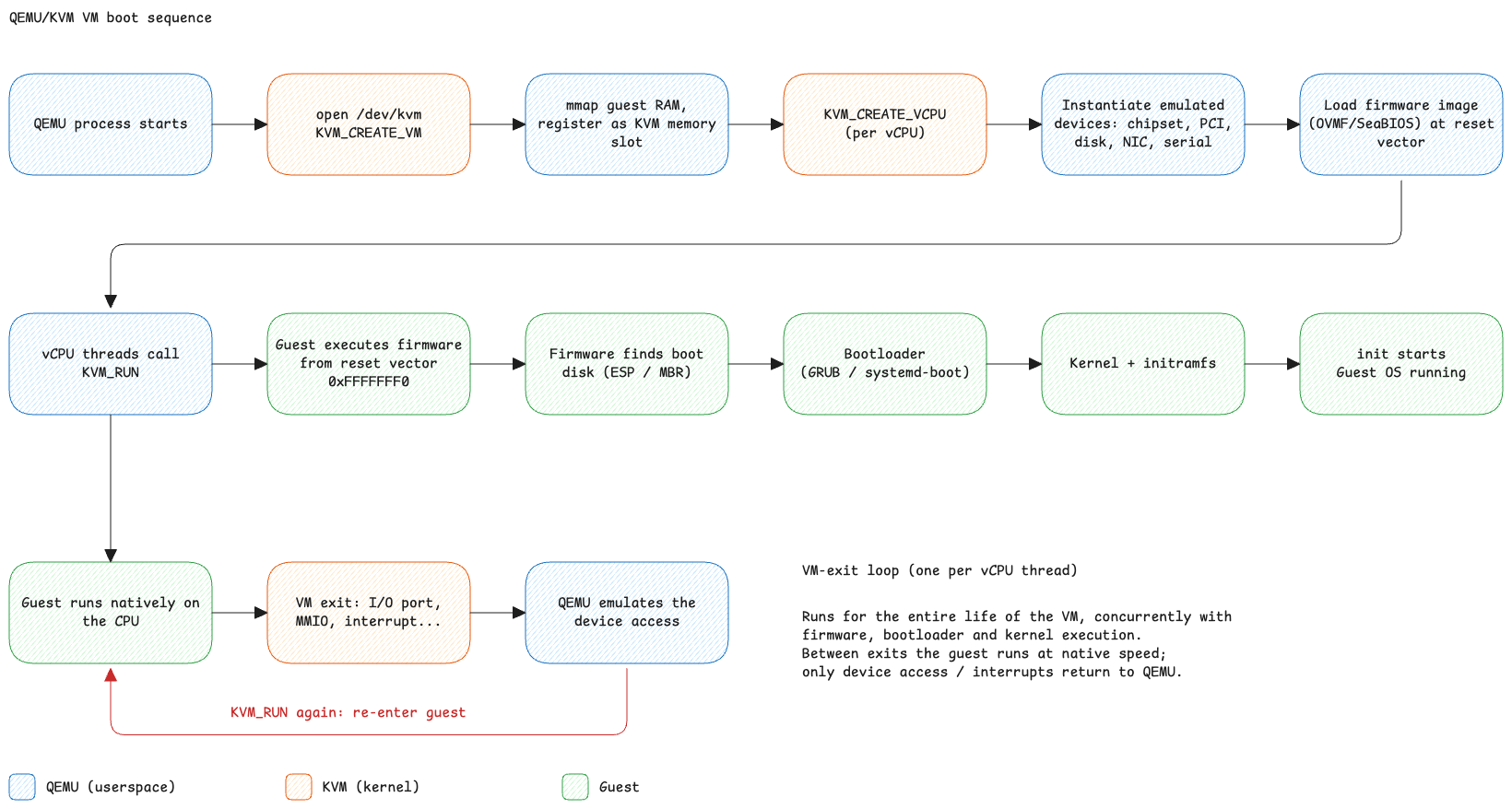
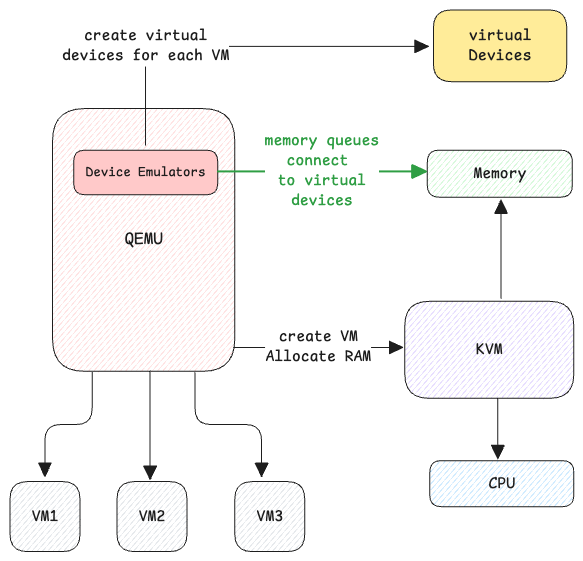
QEMU stands for Quick Emulator. It's a VMM that creates virtual machines using KVM for CPU and memory and provides emulation other devices.
vCPU in virtual machines
When a virtual machine is created in QEMU, we need to specify the number of CPUs the virtual machines sees. That's the vCPU count. The Guest OS assumes that these are the physical CPUs available. The scheduler of the OS then schedules one thread at a time on each vCPU.
Every vCPU is a thread started by QEMU and also refers to a CPU context. CPU context is a data structure that contains the state of the CPU registers, program counter, stack pointer, and other relevant information.
When the vCPU thread is started on host, it first executes the boot process and then enters the main loop of the guest OS. The thread is still the same but the instruction pointer comes from guest OS code.
Every vCPU is just a thread inside the main QEMU process.
The guest OS sees the exact CPU type and generates instructions for that CPU. No additional translation of instructions is required.
Device Emulators
Except for CPU and memory, all other devices are emulated by QEMU. The device emulation follows the same device manager concept.
In this case, the device managers are mostly memory structures such as queues. On one side the guest OS writes data to these queues. On the other side, the QEMU emulators process them on the host and write results back to the queues.
This is just a high level mental model. Every device is different and there are many internal details that aren't covered here.
VM Boot Process
This follows the exact same process explained in Linux Boot Process document. The only difference is that the UEFI firmware is also provided by QEMU.